
Why Ivermectin Blasts the 10 Deadliest Cancers
It Attacks the Desmoplastic Shield, Blocks HIF, and Reverses Immune Evasion


For decades, ivermectin was known simply as a Nobel Prize-winning antiparasitic agent, prized for eradicating river blindness. Today, a growing body of evidence reveals that this humble, cheap, and remarkably safe drug possesses key anti-cancer mechanisms:
Can suppress the desmoplastic shield protecting solid tumors and attack Cancer-Associated Fibroblasts (CAFs), even in brain and liquid cancers.
Helps reverse profound immune evasion.
Synergizes powerfully with both chemotherapy and monoclonal antibody treatments.
In an oncology landscape plagued by drug resistance and immunologically “cold” tumors, ivermectin’s multi-targeted mechanism positions it as a rare agent that hits cancer from multiple angles—a single molecule capable of attacking cancer on at least three independent fronts simultaneously.
Revisiting the 10 Deadliest Cancers and Exactly Why They are so Lethal
Notice that in all of the “10 Deadliest Cancers” that Dr. Marik and I published one year ago, these tumors demonstrated high degrees of HIF activation alongside elevated lactate and glycolytic enzymes—a metabolic profile consistent with the Warburg effect. We concluded that targeting these metabolic pathways with repurposed agents could substantially suppress the growth of these cancers. Consequently, our initial focus was on agents that blocked HIF and reversed the Warburg effect.

We were focused on suppressing cancer’s metabolism, not on the structure and immune function of the microenvironment.

What if There Was Another Reason, Another Common Denominator, for These 10 Deadly Cancers?
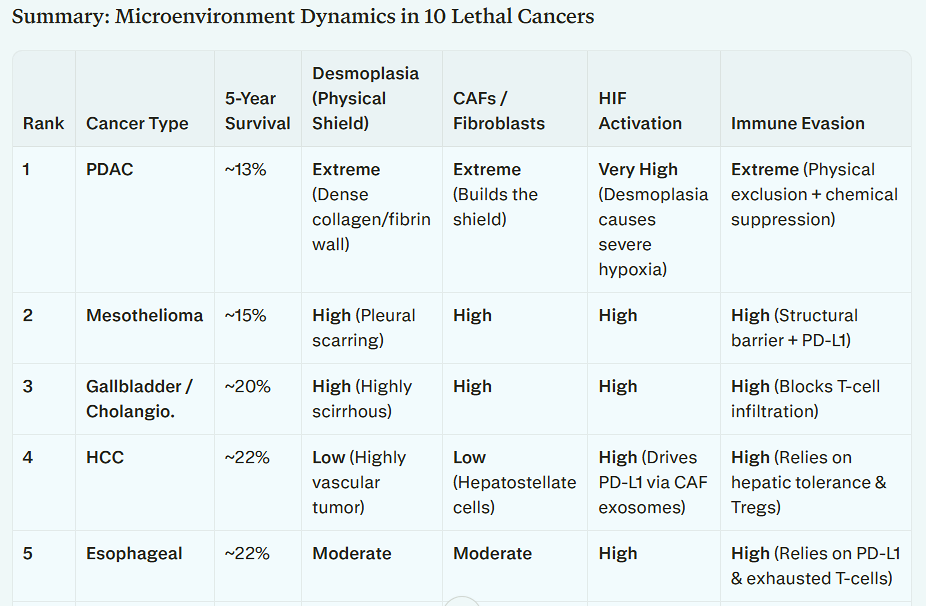
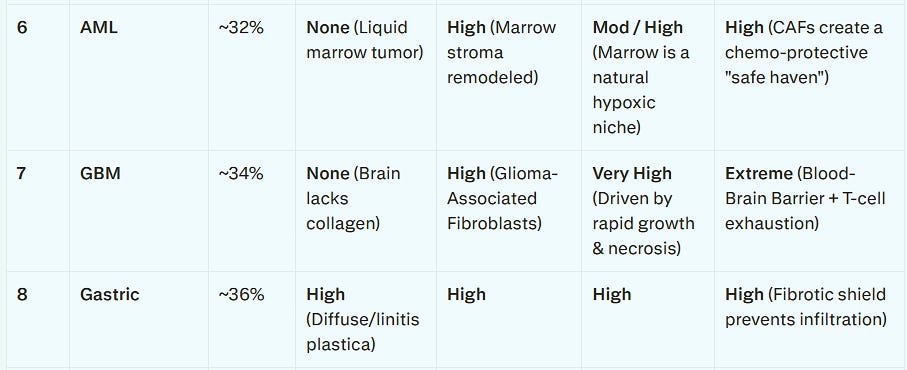
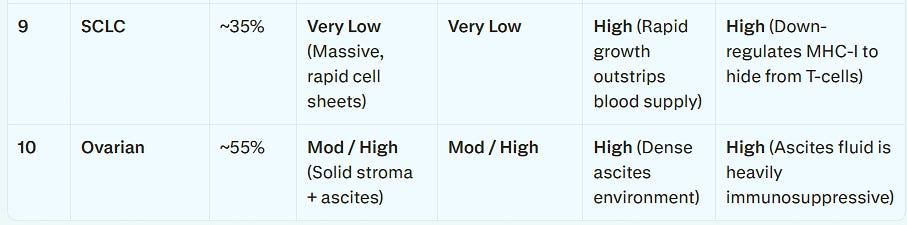
Today in July of 2026, more than one year later, another commonality, distinct from metabolism and the Warburg Effect, has appeared. If we review the table below, it begins to reveal itself.
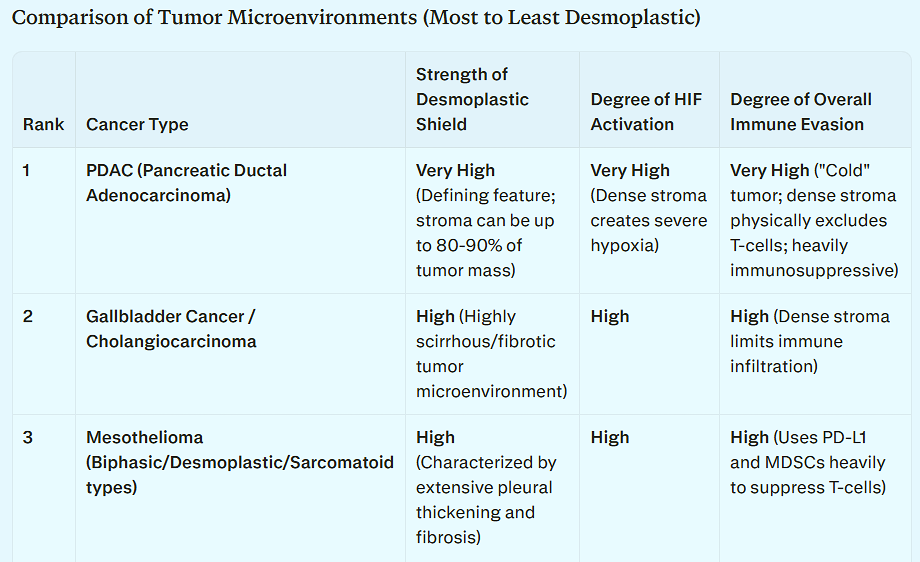
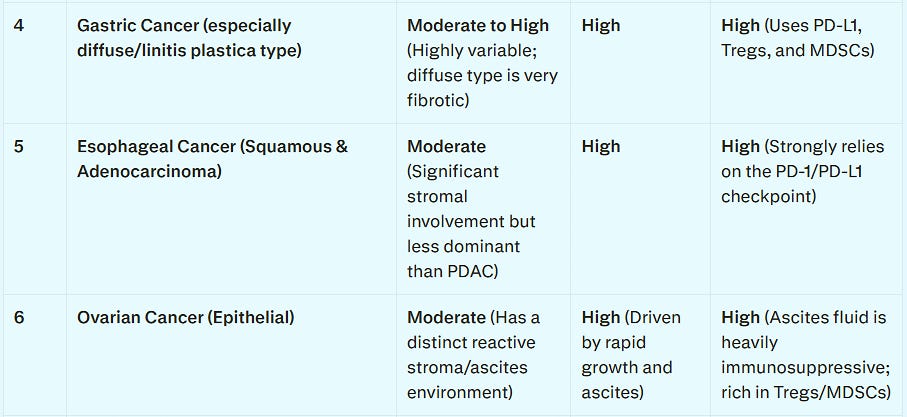
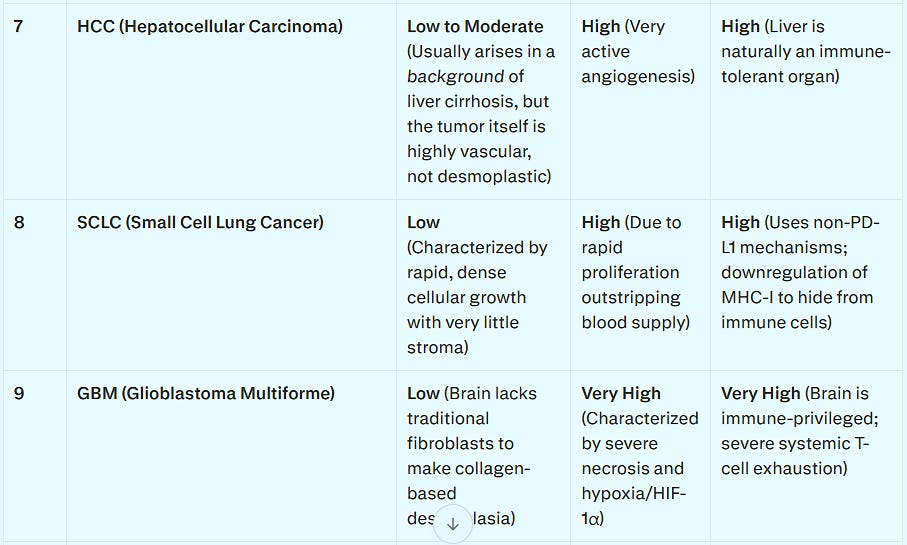

As you can see, the desmoplastic shield is only partially common to all. The traditional shield does not exist in Glioblastoma or Acute Myeloid Leukemia.
However, CAFs, Cancer Associated Fibroblasts, do exist in those two malignancies which serve a high degree of hypoxia and immune evasion, even without the traditional desmoplastic shield. These tumors, GBM and AML, possess more of a chemical shield, but a shield, a powerful immune shield, nevertheless.
Gliomas have GAFs or Glioma Associated Fibroblasts, so there is architectural remodeling even in these brain cancers. AML produces significant CAFs or cancer associated fibroblasts within the protected and hypoxic bone marrow.
The Key Common Denominator of the Top 10 Deadly Cancers
After further research, a highly significant common denominator among these 10 deadly cancers has emerged: the remodeling of the tumor microenvironment. Driven by CAFs and fibrin deposition, this remodeling leads directly to massive HIF activation and profound immune evasion.
This is most obvious with a visible high stroma, high fibrin, desmoplastic shield which occurs in almost all lethal solid tumors.
What is also true, with some important biological nuances, is that CAFs function in non-traditional environments like GBM and AML, and how they drive HIF, immune evasion, and lethality to a similar degree.
While Glioblastoma (GBM) and Acute Myeloid Leukemia (AML) lack the classic dense, physical “desmoplastic shield” seen in pancreatic or breast cancer, both have recently been shown to utilize specialized Cancer-Associated Fibroblasts (CAFs) to construct highly immunosuppressive microenvironments.
Here is how immune evasion, CAFs, and lethality are directly linked in these two deadly cancers:
Glioma-Associated Fibroblasts (GAFs)
Traditionally, the brain was thought to lack fibroblasts. However, recent multi-omics studies have identified specific Glioma-Associated Fibroblasts (GAFs)—often derived from perivascular cells or transformed astrocytes.
Immune Evasion Mechanism: GAFs do not build a physical wall of collagen. Instead, they act as chemical architects of immune suppression. They engage in extensive crosstalk with macrophages, driving them toward the immunosuppressive M2-polarized state (often via TGF-β signaling). They also secrete cytokines like CCL2, upregulate PD-L1, and induce dysfunction and exhaustion in CD8+ cytotoxic T-cells (increasing T-cell exhaustion markers like LAG3 and PD-1).
Link to Lethality: This chemically induced immune evasion directly correlates with lethality. The presence of specific CAF subtypes in gliomas (such as antigen-presenting CAFs or apCAFs) is significantly associated with poor clinical outcomes, therapeutic resistance, and immunotherapy failure.
CAFs in Acute Myeloid Leukemia (AML)
Similarly, AML is a liquid tumor in the bone marrow, traditionally thought of as lacking a stroma. However, the bone marrow microenvironment is highly dynamic, and leukemic blasts actively remodel resident marrow stromal cells into AML-associated CAFs.
Immune Evasion and Chemo-protection Mechanism: In AML, CAFs create “safe havens” or niches within the bone marrow. These CAFs secrete high levels of factors like Growth Differentiation Factor 15 (GDF15), which act as survival and chemo-protective factors for the leukemic cells. They also interact with immune cells to create an environment where leukemic blasts can evade T-cell surveillance.
Link to Lethality: The degree of this CAF-mediated remodeling is directly linked to patient mortality. Clinical studies analyzing bone marrow biopsies of primary AML patients found that excessive CAF presence (and the resulting reticular fiber networks they create) led to significantly higher frequencies of relapse and overall mortality.
The 10 Deadliest Cancers: Mechanisms Revised
In both GBM and AML, the traditional view of a purely “cellular” cancer has been overturned. The degree of lethality in both diseases is directly related to the tumor’s ability to hijack local cells, turn them into CAFs/GAFs, and use those fibroblasts to execute profound chemical immune evasion and chemoresistance.
The clinical rationale today, guided by new research unveiled over the past 12 months, is to add repurposed agents that target CAFs and immune evasion, complementing the blockade of Warburg metabolism. Ivermectin emerges as the most versatile repurposed multi-targeted cancer agent against the “10 Deadly Cancers”.
Breaking Down the Desmoplastic Shield
The defining feature of the most lethal solid tumors—pancreatic, cholangiocarcinoma, gastric, and advanced colorectal cancers—is desmoplasia: a dense, collagen-rich fibrotic stroma built by cancer-associated fibroblasts (CAFs) that physically entombs the malignant cells.
This shield is not passive scar tissue; it is an actively maintained fortress, constructed and reinforced by two central signaling engines: the Wnt/β-catenin pathway and Transforming Growth Factor-beta (TGF-β).
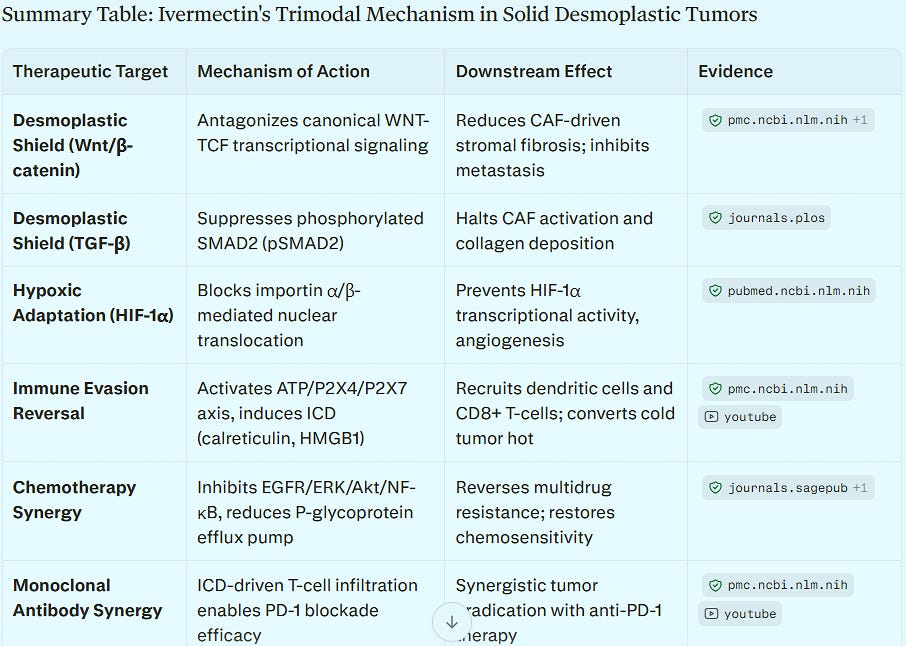
Ivermectin directly interferes with both engines. Mechanistically, ivermectin was identified in a large-scale repositioning screen as a potent antagonist of canonical WNT-TCF signaling, the pathway responsible for maintaining cancer stem cell populations and driving fibrotic stromal remodeling. By suppressing Wnt/β-catenin activity, ivermectin measurably reduces tumor cell motility and inhibits the metastatic cascade in vivo, effectively starving the stroma-building machinery of its primary transcriptional driver.
Simultaneously, ivermectin attacks the TGF-β axis, the biochemical glue that transforms ordinary fibroblasts into desmoplasia-generating CAFs. Recent 2026 data demonstrate that ivermectin significantly suppresses phosphorylated SMAD2 (pSMAD2), the essential downstream messenger of TGF-β receptor signaling, while preserving SMAD4, a marker of favorable prognosis. This dual action effectively silences the fibrotic signal at its source.
Because TGF-β and Wnt operate as complementary “master switches” for stromal architecture, ivermectin’s simultaneous suppression of both pathways represents a rare two-pronged assault: it does not merely dissolve existing collagen, but starves the tumor of the signaling capacity to rebuild its fortress. Additionally, ivermectin has been shown to suppress HIF-1α by blocking its importin α/β-mediated nuclear translocation, meaning the hypoxic signal that perpetuates fibrotic remodeling and angiogenesis is choked off before it can act on the genome.
Reversing Immune Evasion: From Cold to Hot
A desmoplastic shield is lethal precisely because it excludes the immune system. Even when cytotoxic CD8+ T-cells are present in the bloodstream, the stiff collagen matrix physically traps them at the tumor’s invasive margin, creating an immunological “cold” tumor incapable of mounting an antitumor response.
Ivermectin’s second mechanism directly counteracts this exclusion through the induction of immunogenic cell death (ICD)—a specialized, immunologically “loud” form of cancer cell death entirely distinct from silent apoptosis.
Ivermectin functions as an allosteric modulator of the ATP/P2X4/P2X7 purinergic receptor axis. Upon activation, dying cancer cells release massive quantities of extracellular ATP, a molecular alarm bell that recruits dendritic cells and antigen-presenting machinery to the tumor site.
The translocation of calreticulin to the cell surface, functioning as an “eat-me” flag for phagocytic immune cells.
The active release of HMGB1 (high-mobility group box 1 protein) from the nucleus, serving as a potent danger-associated molecular pattern (DAMP).
Together, these signals transform a dying tumor cell from an invisible casualty into a beacon that actively summons the adaptive immune system.
The consequence, observed directly in preclinical breast cancer models, is a dramatic and measurable restoration of cytotoxic T-cell infiltration into previously T-cell-deserted tumors.
Ivermectin treatment shifts the ratio of effector T-cells to immunosuppressive regulatory T-cells (Tregs) decisively in favor of antitumor immunity, while simultaneously suppressing the desmoplastic collagen that would otherwise have physically barred these newly recruited lymphocytes from reaching the tumor core.
In essence, ivermectin performs a coordinated double maneuver: it dissolves the physical gate (via TGF-β/Wnt suppression) at precisely the moment it summons the army (via ICD) that needs to pass through it.
Synergy with Chemotherapy and Monoclonal Antibodies
Ivermectin’s third and perhaps most clinically compelling property is its capacity to potentiate existing standard-of-care therapies rather than compete with them. In multidrug-resistant colorectal and breast cancer models, ivermectin was shown to bind directly to the extracellular domain of the epidermal growth factor receptor (EGFR), inhibiting the downstream ERK/Akt/NF-κB signaling cascade.
This inhibition reduces transcription of P-glycoprotein (P-gp), the notorious efflux pump responsible for expelling chemotherapy drugs like vincristine and doxorubicin from cancer cells before they can act. By silencing this resistance mechanism, ivermectin restores chemosensitivity in cells that had previously become refractory to treatment.
This synergy has been independently replicated across multiple tumor types. In osteosarcoma, ivermectin combined with doxorubicin produced substantially greater tumor suppression than doxorubicin alone, achieved through induction of oxidative stress, mitochondrial dysfunction, and caspase-dependent apoptosis—all at clinically feasible, non-toxic doses.
In high-grade serous ovarian carcinoma, ivermectin strengthened the cytotoxic effect of paclitaxel in chemoresistant cell populations. In pancreatic cancer—among the most desmoplastic and treatment-resistant malignancies known—ivermectin combined with recombinant methioninase produced an 80% reduction in cancer cell viability, nearly double the 45% reduction observed with ivermectin alone.
Perhaps most significantly, ivermectin’s synergy extends directly into the realm of monoclonal antibody immunotherapy. Because ivermectin converts cold tumors hot through ICD, it creates the essential prerequisite condition for checkpoint inhibitors like anti-PD-1 antibodies to function at all: the physical presence of T-cells within the tumor bed.
Preclinical breast cancer models combining ivermectin with anti-PD-1 antibodies demonstrated dramatic synergy, achieving roughly 75% long-term survival in surgical models and approximately 40% survival in metastatic models—far surpassing either agent alone. This mechanistic rationale has now advanced into a Phase I/II human clinical trial combining ivermectin with pembrolizumab for metastatic triple-negative breast cancer.
What Makes Ivermectin Such a Powerful Anti-Cancer Agent?
What makes ivermectin unusual is not that any single mechanism is unprecedented, but that all three—stromal disruption, immune reactivation, and chemo/immunotherapy sensitization—converge within one inexpensive, FDA-approved, and extensively safety-tested molecule.
Most oncology drugs are engineered narrowly against a single target; ivermectin’s polypharmacology across Wnt, TGF-β, HIF-1α, EGFR, and purinergic signaling allows it to simultaneously soften the tumor’s physical architecture while awakening the immune system trapped outside its walls.
Summary Table: Ivermectin’s Trimodal Mechanism in Solid Desmoplastic Tumors
Conclusion
Ivermectin exemplifies the promise of intelligent drug repurposing: a decades-old, globally accessible antiparasitic agent now revealing a sophisticated, multi-front anticancer mechanism - far beyond merely attacking cancer’s metabolism - precisely tailored to the greatest unmet challenges in lethal tumor oncology—desmoplastic fortification and immune exclusion.
By simultaneously blocking HIF and dismantling the fibrotic stroma, converting immunologically cold tumors hot through immunogenic cell death, and restoring sensitivity to both chemotherapy and checkpoint immunotherapy, ivermectin functions less like a single-target drug and more like a coordinated combination therapy compressed into one molecule. As clinical trials continue to advance, ivermectin stands as a powerful testament to the future of intelligent drug repurposing.
Readers’ Questions: [We Invite Your Questions in the Comments]
Disclaimer: These questions and answers are for educational purposes only and are not to be construed as medical advice. Do not start or modify any treatment without the direct supervision and guidance of a qualified physician. Always consult your doctor before making clinical decisions.
Below, we discuss and analyze readers’ questions inspired by the comments section. These answers are expanded into an educational and teaching format so all readers may benefit.
While we cannot provide specific treatment advice, these questions and answers can enhance your understanding of how various repurposed agents and supplements are selected to target specific cancers. They are designed to be evidence-based so patients may print them out and share them with their treating physicians.
Question #1: Could you discuss AML and the potential of repurposed agents in suppressing HIF, the desmoplastic shield/CAFs, and immune evasion?
Answer:
Keep reading with a 7-day free trial
Subscribe to Repurposed Drugs: Powers & Possibilities to keep reading this post and get 7 days of free access to the full post archives.